
In 2025, a company releasing new film should get our attention. Harman, the makers of Ilford film stocks, run a budget line under the name of Kentmere. For year, their pan 400 has been popular for home developers and bulk loaders. For the value, these films have performed very well compared to their big brothers like HP5, delta, ortho or even the Kodak line of tri-x and tmax. In an age where film only keeps getting more expensive, these budget friendly brands are fighting the good fight to help us keep shooting the medium we love.

My film philosophy:
I have been home developing my black and white film for nearly a decade now. Like any good black and white, I prefer my look to have punchy blacks with just enough grain to keep you honest. To achieve this, I always push my film at least a stop. To add another layer, I also expose my image one stop under box speed. So the method would be one stop under, one stop over.
To put this into practice, if your film speed is 400, I set my light meter for 200, then when I go to develop, I push one stop. This means I am developing at 800 speed film. This shooting method gives me a wide range of versatility and shooting conditions. It allows me to expose images indoors while also being able to step outside without a problem. By one stop under and one stop over, it essentially is giving me a 2 stop room for error meaning less chance of an underexposed negative. These modern day emulsions, like their color siblings, have great latitude to handle this.

Initial reports of the pan 200 reviews were very positive. What was an area for opportunity with the pan 400, the pan 200 was said to be sharper and less noisy while having much better latitude. Pan 400 was known to be less contrasty while also having issues with the highlights easily being blown. Sounded like a win to me!!
I picked up two rolls with the intent to try my one stop under, one stop over method while subjecting this to how I would normally shoot my HP5. This being a 200 speed, I set my meter at 100 and off I went.
I had a great mix of lighting conditions, indoor vs outdoor, portraits vs landscape for when it came time to develop the rolls. I shoot my black and white in pairs to be able to maximize the Patterson tank I have as well as chemicals.
To my surprise, I did not have any developing times available for this film with my developer at 800. The Kentmere 200 was not even in the mass dev. App even after being out a few months at this point. Upon more research, there was not even much surrounding this film and pushing past box speed. Jahan Saber (Do You Develop) recently posted some time tests from this film, but it was not with fluid I use, or with any solid time figures to follow, solely latitude tests.
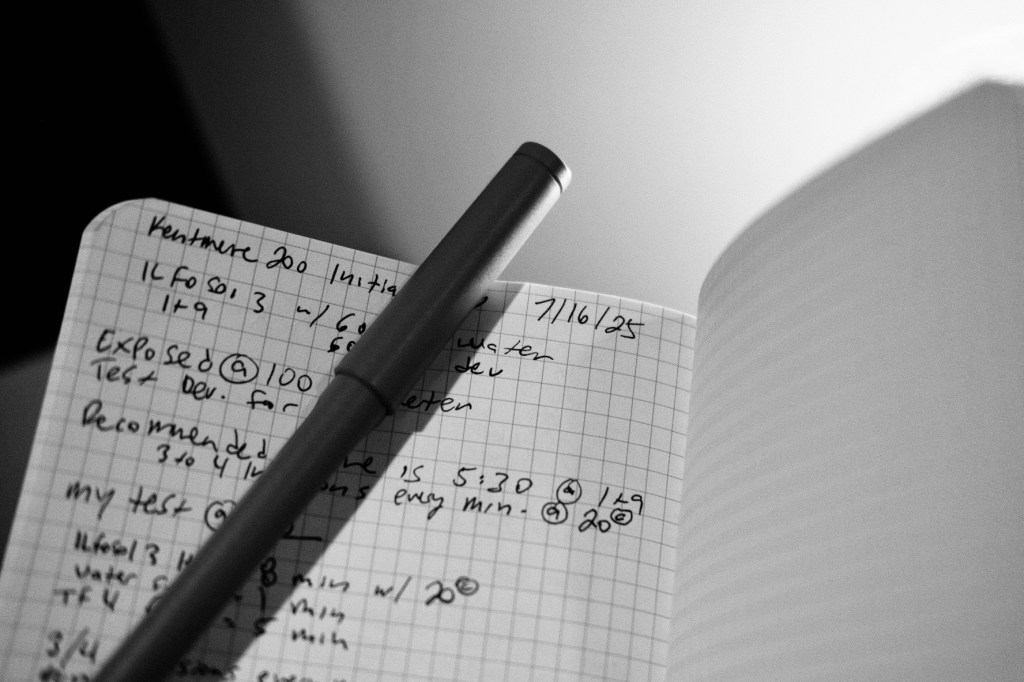
Lately, I have been developing with Ilford Ilfosol 3 for developer, water as a stop bath, then TF4 photo formula for my fixer. With this combo, it creates the most diversity in development while also the least amount of waste since water is the stop bath and you can reuse the fixer until it’s exhausted. Less waste, more film, less chemicals = win win.
Ilford recommends 5:30 development with ilfosol 3 at 20* C and 1+9 mixture. Comparing my other film stocks, it looked to be about a 2/3 minute addition in developing time for each stop. I decided to split it down the middle and did the following,
- Ilfosol 3 1+9 mixture at 68 °F for 8 minute.
- Stop bath of distilled water for 1 minute
- TF4 fixer for 5 minutes
- 10 minute rinse
Matching most developing methods, the first minute of each step is agitation followed by 10 seconds agitation each minute after.

Initial review under the loupe was very positive. Just like its big brother of HP5, the negatives dried flat which is always a bonus in the home developing and scanning world. They looked sharp with good exposure throughout.
I DSLR scanned these in the next day and was able to run them through my typical LR conversion and this is where the rubber really meets the road.
The first thing I noticed was the sharpness and grain structure. The images had just the right amount of grain and contrast while also holding together. Sometimes imagines become very noisy when pushing film where the separation and natural fall of is not as noticeable as you would like. For pushing a 200 speed film, this was very impressive. Second was the contrast. Pushing film naturally achieves this and is one of the large draws to doing this. It is parts for the look it renders while also creating more shooting versatility. My last 40 rolls of home developed black and white have been by this formula. Over that time, it was been 80% Ilford HP5 with the remaining 20% being tri-x. Tri-x solely made a comeback due to it now being cheaper than HP5 in the states due to some dipshit imposing tariffs on everything. Lastly, there was very unique halation in the highlights. It reminded me of the glow you get from stand developing. It added a nice atmosphere to the photos. I will have to keep an eye on if this is the film or the pushing causing this look.
Now for the comparisons : all shot on my M2 and Zeiss 50mm planar, developed in ilfosol 3 and pushed 1 stop over box speed while metered one stop under box speed.
Tx400
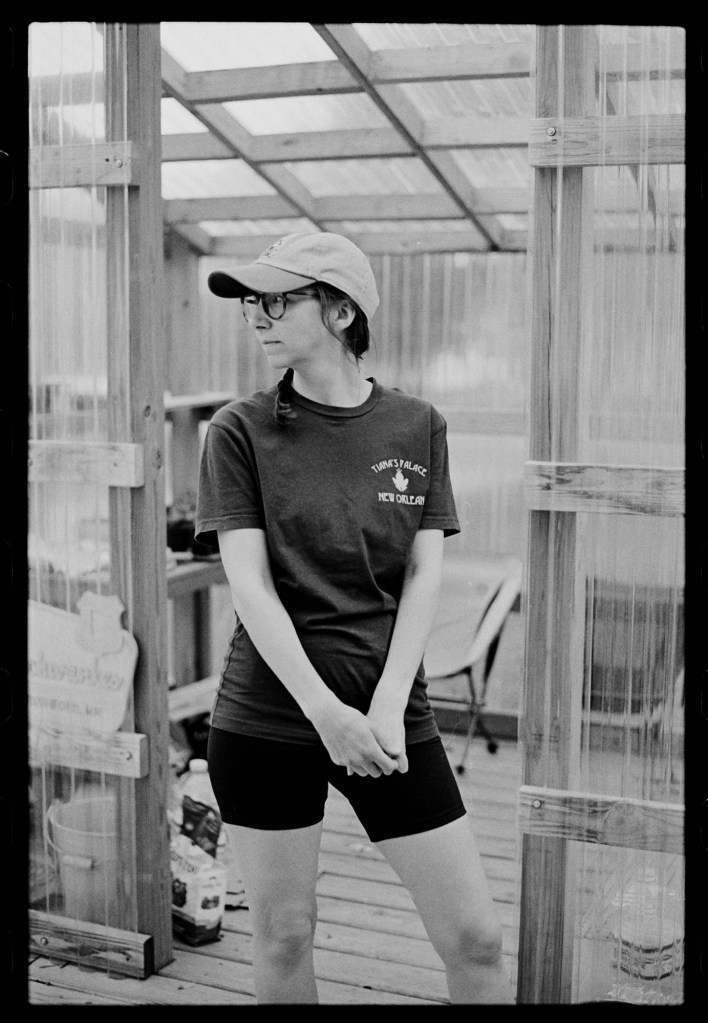
Ilford HP5
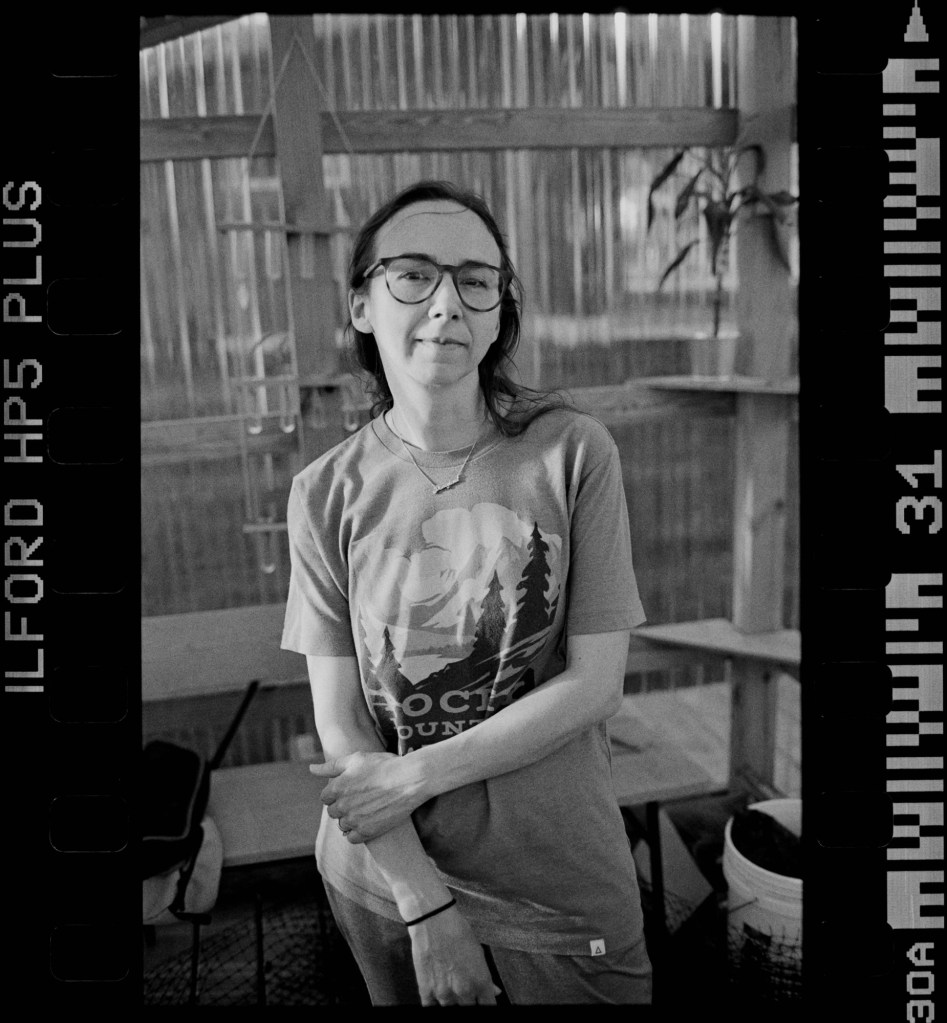
Kentmere Pan 200

Now, you are not going to be retiring off the savings in choosing Kentmere over Kodak or Ilford, but anything helps. At the time of writing this, Kentmere pan 200 is 7.95 a roll, Kodak tx400 is 8.95 a roll and Ilford HP5 is 10.99 a roll on B&H. Bulk roll prices are even more favorable at 100 for Kentmere and over the 160 mark for the others. If you shoot that much, bulk rolling is where you will really see a savings.
All in all, I will definitely be adding more rolls of this into my rotation. For summer, this film gives a flexibility where you would want a lower speed film. Will it fully replace HP5 for me? Not at the moment, but I can tell you my next bulk roll purchase will be the Kentmere pan 200 and not HP5 or TX400.
Go and get a few rolls and have fun! They are worth it!!
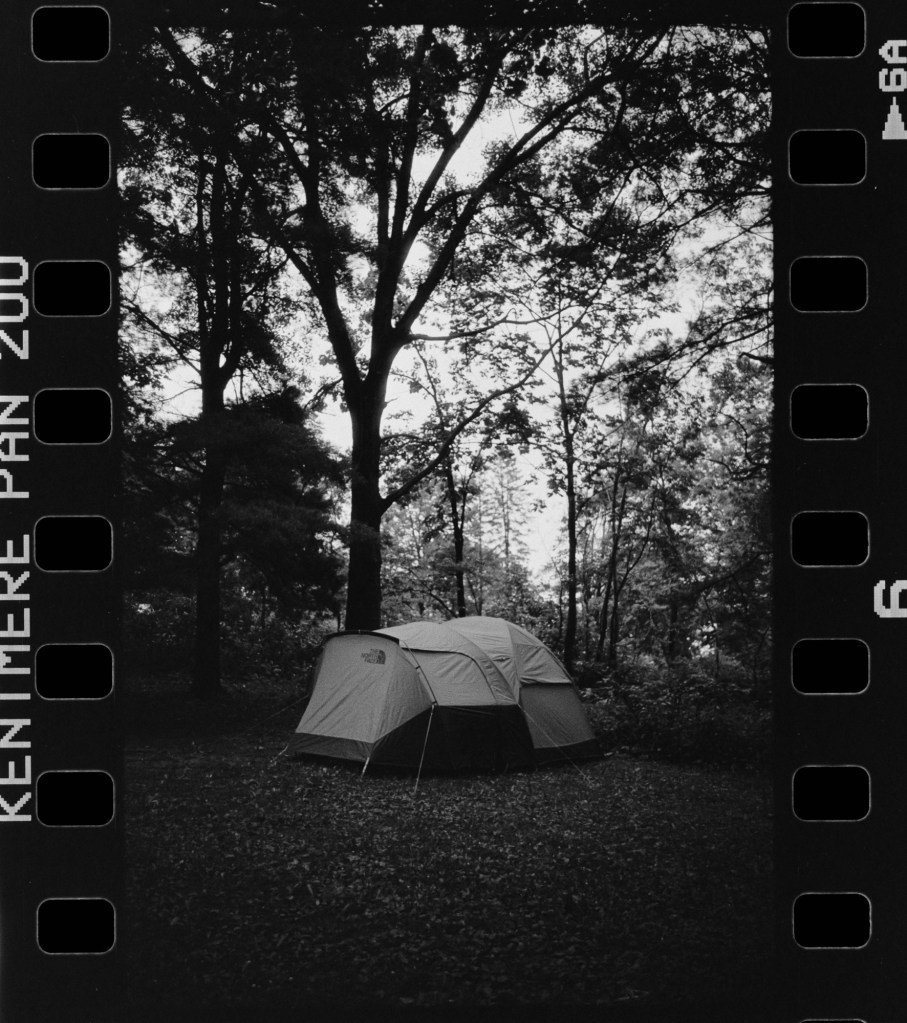
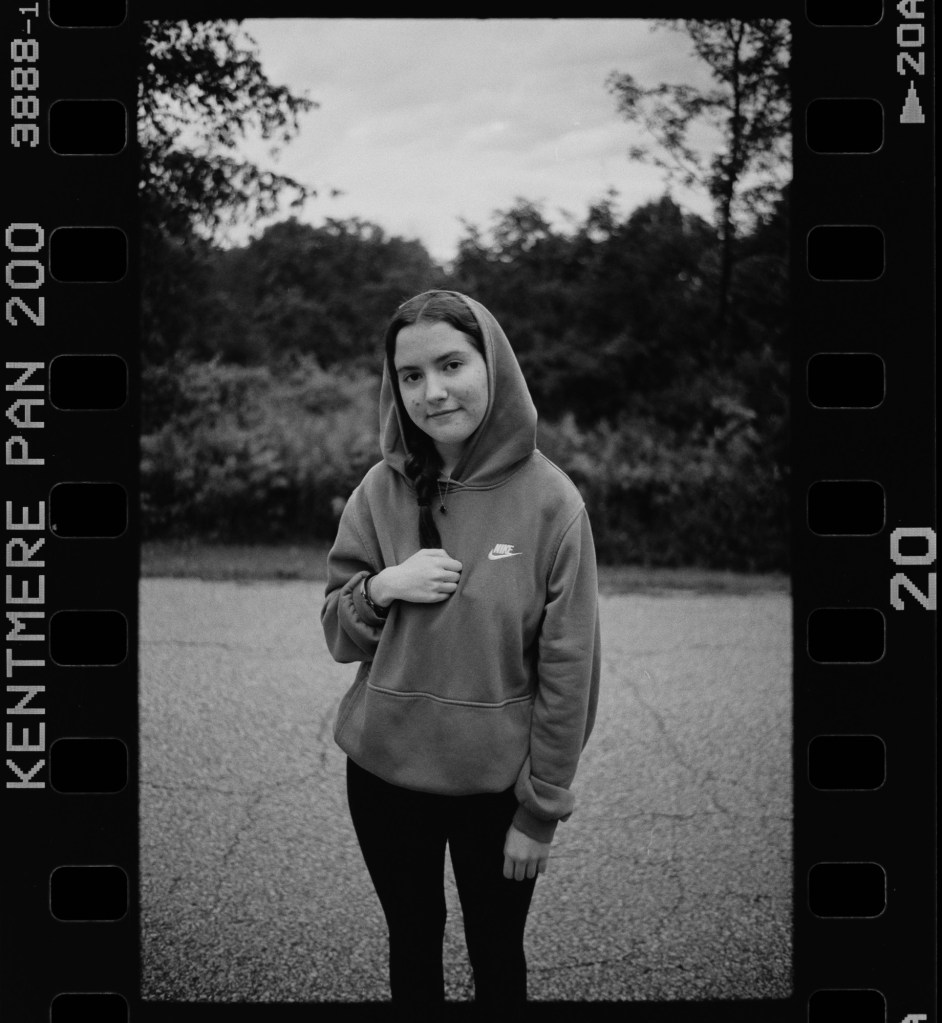
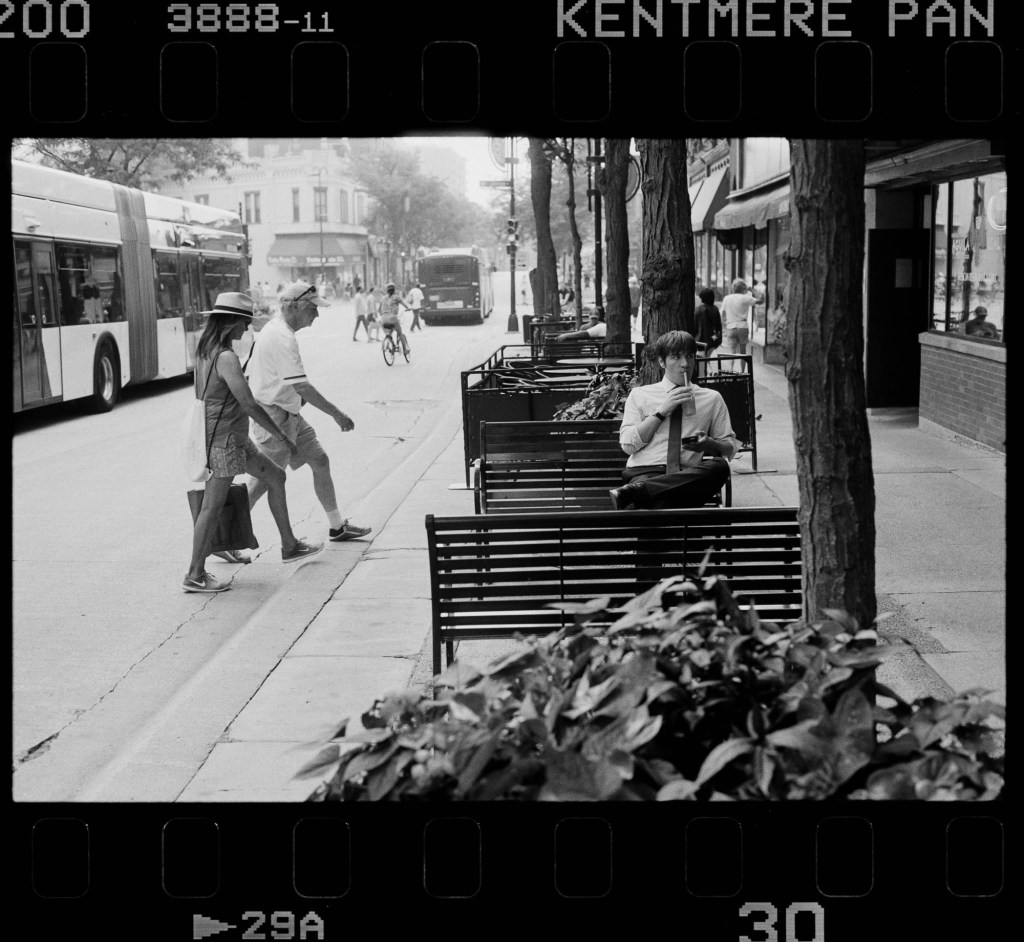
Here are some other favorites from my first rolls:
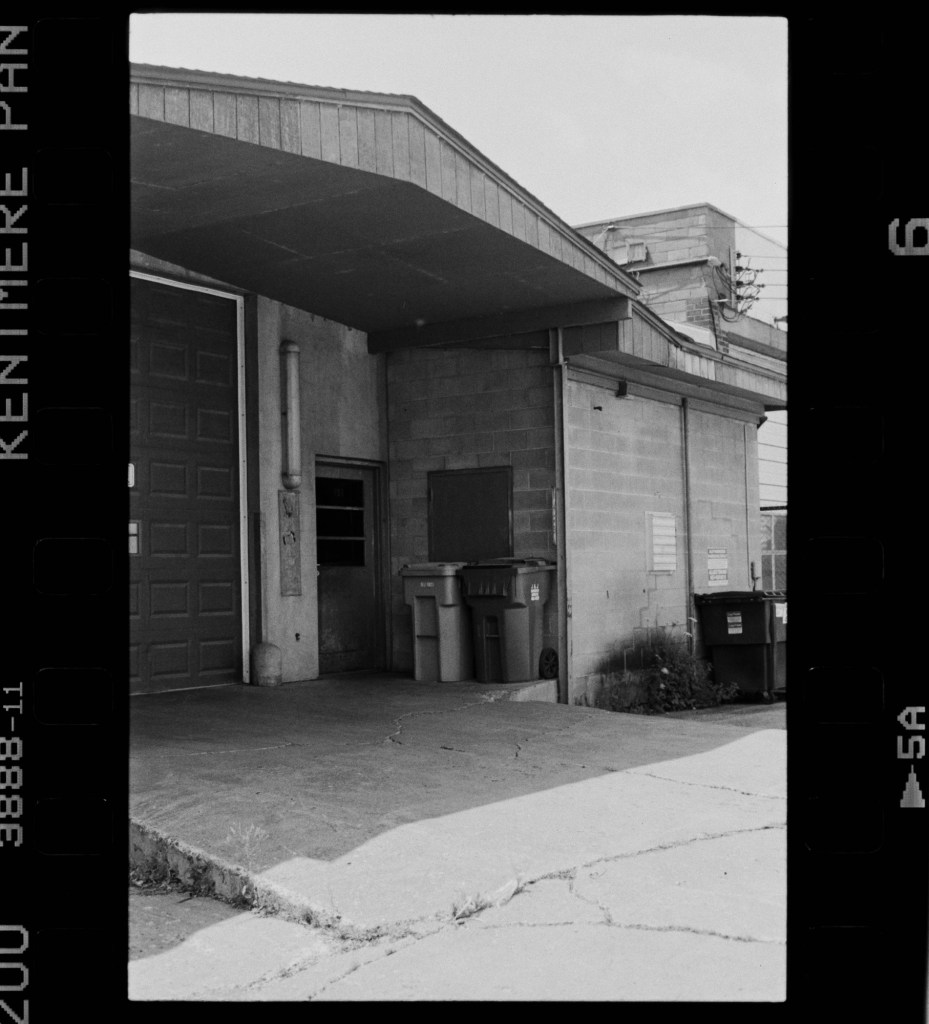





 Where We Are.
Leave a reply to homeontherangefinder Cancel reply